Free Project Quotes 216-485-2656 | No In-Home Visit Required

Free Project Quotes 216-485-2656 | No In-Home Visit Required
Most window manufacturers test and certify for all climate zones — but Northeast Ohio’s weather is far from average. We install windows in a place that gets humid summers, lake-effect snow, high winds, and everything in between.
Window Universe doesn’t just choose windows based on national averages. We select products, features, and performance ratings that make sense for the Cleveland area.
Energy-efficient windows can do more than lower your utility bill by 10–15%. The right features can make your home feel more comfortable year-round—less heat in the summer, fewer drafts in the winter, and less glare through sunny windows.
There’s no such thing as a one-size-fits-all solution, especially in Cleveland’s unpredictable weather. But a thoughtfully selected window system can deliver more consistent indoor temperatures, lower HVAC usage, and a better-looking home overall.

Homeowners in Northeast Ohio need windows that can do two seemingly opposite things:
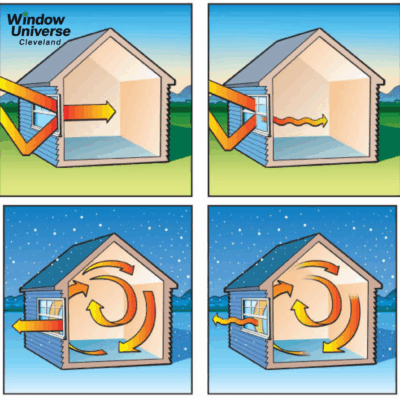
Energy-efficient windows are designed to combat the summer heat by:
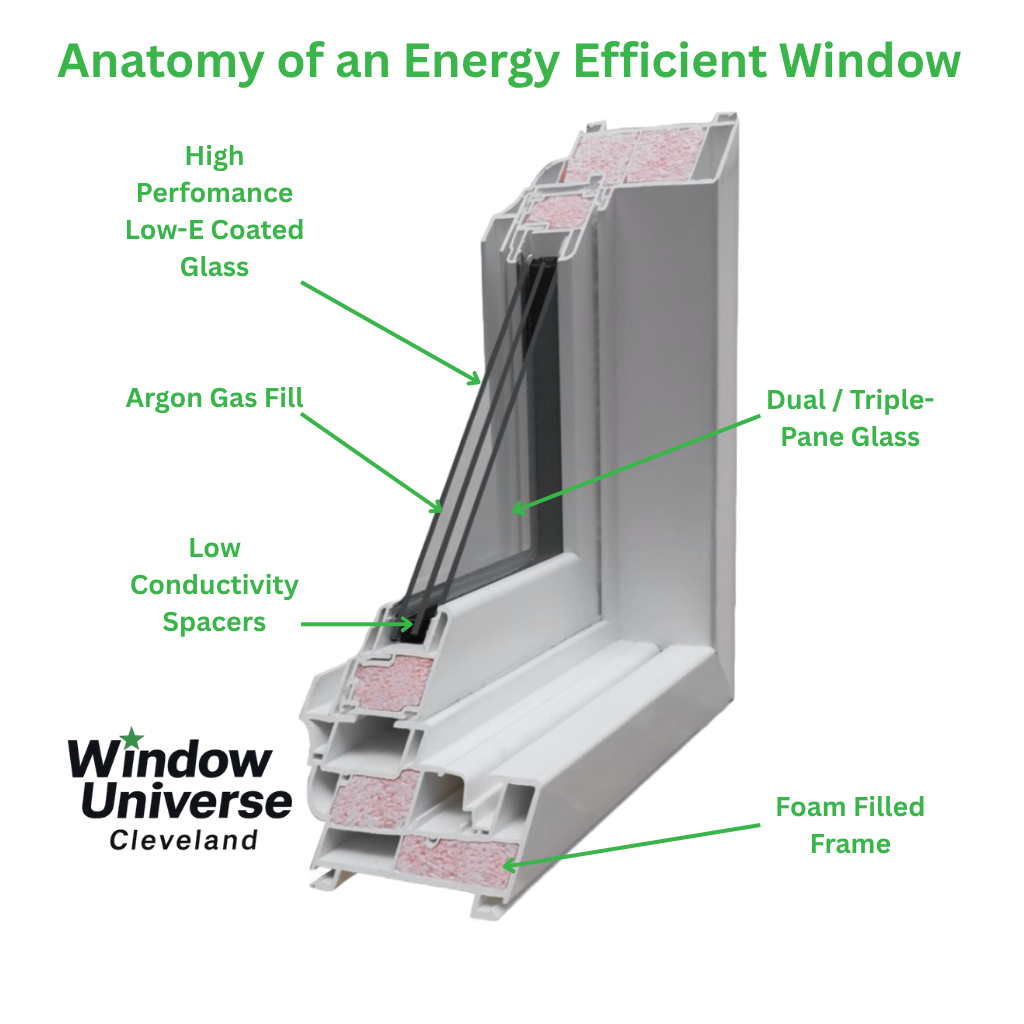
Keeping heat out: Low-E (low-emissivity) glass coatings reflect solar heat before it can enter your home, significantly reducing heat gain.
Reducing solar glare: These coatings help minimize harsh glare, making your indoor spaces more comfortable.
Blocking damaging UV rays: Low-E glass blocks harmful UV rays, protecting furnishings from fading.
Reducing heat conduction: Insulating gases like argon between glass panes reduce the transfer of heat into your home.
When winter arrives, the right windows become crucial for retaining warmth and preventing drafts:
Keeping cold air out: Multiple panes with insulating gas layers help keep warm air inside.
Preventing drafts: Warm-edge spacers and tight seals eliminate heat loss and drafts.
Letting in sunlight: Energy-efficient windows maximize natural sunlight, allowing for passive solar heating.
Improving insulation performance: Lower U-values indicate better insulation, keeping heat in during cold months.
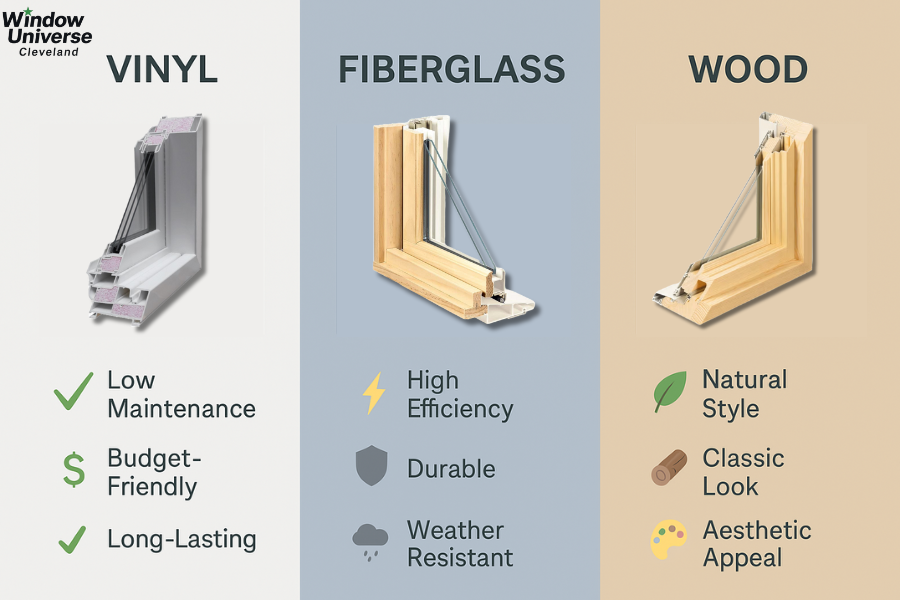
Not all windows perform the same. Here’s a quick look at how different material choices impact energy performance and long-term value:
⚫ Vinyl
Strong thermal performance
Low maintenance
Most cost-effective option
🔵 Fiberglass
Excellent strength and stability
Slightly better efficiency than vinyl — at a higher cost
🟤 Wood
Natural insulation and classic style
Requires more upkeep
Less energy efficient than vinyl or fiberglass
We primarily install energy-efficient vinyl windows because they offer excellent long-term value for Northeast Ohio homes.
That said, we also offer wood and fiberglass options (like Marvin) for homeowners prioritizing architectural character or natural materials.

Every window we install is independently tested and labeled by the National Fenestration Rating Council (NFRC). These labels show several key energy performance ratings:
🧊 U-Factor – How well a window keeps heat inside. Lower is better, especially for cold climates like ours.
☀️ Solar Heat Gain Coefficient (SHGC) – How much heat from sunlight passes through. Lower numbers reduce summer cooling costs.
💡 Visible Transmittance (VT) – How much natural light comes through the glass. Higher is brighter.
💨 Air Leakage (AL) – How much air passes through gaps in the window. Lower values mean less draft.
💧 Condensation Resistance – A higher number means the window is better at resisting interior condensation.
We’ll help you choose the best balance for your home and your needs.
💡 While we’re not tax professionals and can’t offer individual advice, we want to make sure you’re aware of available incentives for energy-efficient upgrades.
The Inflation Reduction Act (IRA) includes federal tax credits for qualifying window and door replacements. Here are the key details:
🪟 Up to $600 in credits for energy-efficient windows
🚪 Up to $250 per door, with a $500 cap total
✅ Products must meet the ENERGY STAR® Most Efficient criteria at the time of installation
Tip: If you’re considering using the tax credit, we recommend chatting with a qualified tax professional to understand how it applies to your specific situation.

In addition to federal incentives, some local utilities or energy programs may offer rebates for window or door upgrades. These vary by provider, so it’s worth checking with your electric or gas utility or local energy office.
🔍 Want the full breakdown?
Check out our 📄 Tax Credit & Efficiency Guide (PDF) — it includes the latest ENERGY STAR® criteria, eligible OKNA glass packages, and helpful info pulled straight from the IRS and EnergyStar.gov.
Efficiency isn’t one-size-fits-all. We’ll help you balance performance, aesthetics, and budget. Some homeowners prioritize maximum savings on their energy bill. Others want to eliminate cold spots near large windows or reduce condensation in humid months.
We’ll walk you through your options, explain the performance ratings, and help you find the right fit for your home.
🧊 Cleveland’s weather demands windows that insulate year-round.
📉 U-Factor and SHGC are the two most important ratings to compare.
🪟 Low-E glass, gas fill, and insulated frames all work together to improve performance.
🏡 The best choice depends on your home’s layout and your comfort goals.
💡 Still deciding? We’ll help you make the right call — and install it right the first time.