Free Project Quotes 216-485-2656 | No In-Home Visit Required

Free Project Quotes 216-485-2656 | No In-Home Visit Required
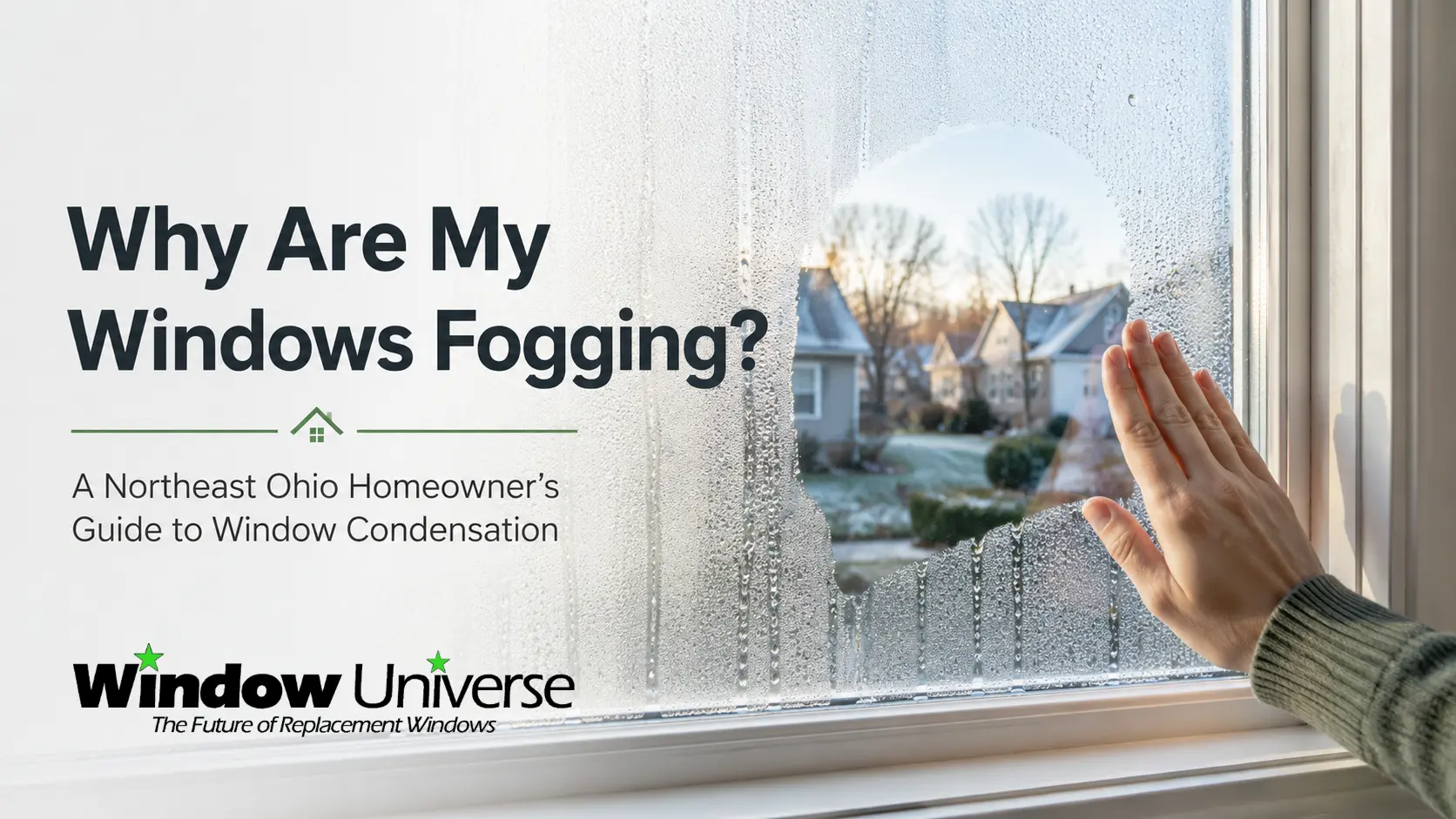
You wake up, open the blinds, and find the window covered in fog or window condensation. Does the window have a broken seal? Why are my windows fogging? Is the house too humid? Are the windows failing?
The answer depends on where the moisture appears.
Condensation on the room-side glass usually points to indoor humidity. Condensation on the exterior glass is often normal during cool, humid weather. Fog trapped between two panes usually signals a failed insulated glass seal.
Before assuming you need replacement windows, figure out which type of condensation you have.
| Location | What It Usually Means |
|---|---|
| Inside surface | Interior condensation. High indoor humidity meeting cold glass is the usual cause. |
| Outside surface | Exterior condensation. This often appears during cool, humid mornings and does not usually indicate a window problem. |
| Between the panes | A failed insulated glass seal is the likely cause. The moisture is trapped inside the glass unit. |
Condensation forms when moist air touches a surface cold enough to reach the dew point.
Warm air holds more water vapor than cold air. When warm, humid air meets cool window glass, the air near the glass cools. Once it reaches its dew point, some of the water vapor turns into liquid droplets.
A cold drink on a humid summer day works the same way. The water on the outside of the glass did not leak through from inside the drink. Moisture in the surrounding air condensed on the cold surface.
Condensation does not automatically mean the window is defective. It often points to a combination of humidity and surface temperature.
Interior condensation appears on the room-side surface of the glass. You should be able to wipe it away from inside the home.
This type is most common during winter. Warm indoor air holds moisture from normal household activity. When this air reaches cold window glass, droplets form.
Common sources of indoor humidity include:
Interior condensation on new windows usually means the home is holding more humidity because the new windows have reduced drafts and air leakage.
Some homeowners notice interior condensation after installing new replacement windows. This often happens because the new windows have reduced the air leakage that existed around the old windows.
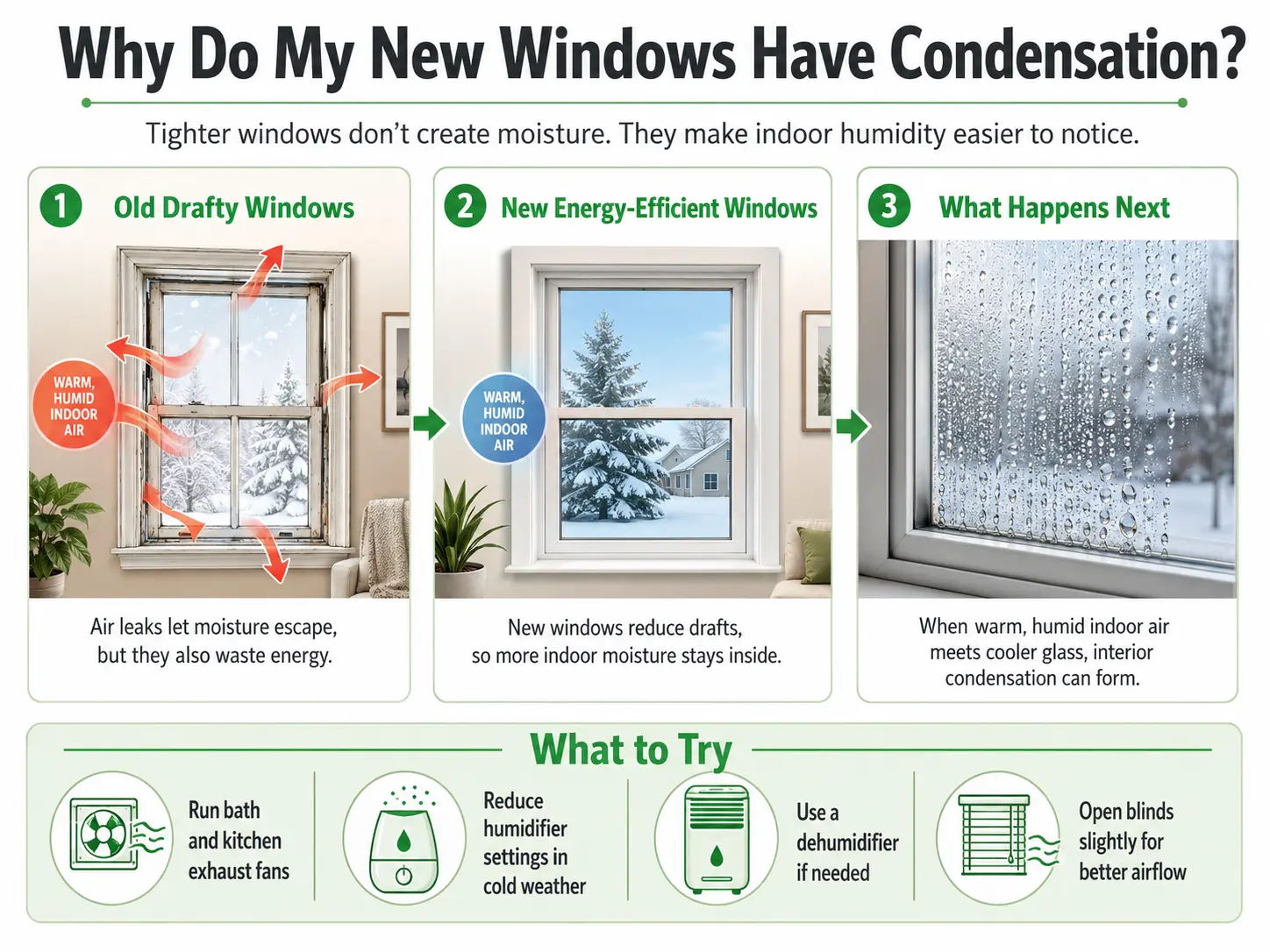
Older windows may have allowed warm, humid indoor air to escape through gaps around the sash or frame. Those drafts wasted energy, but they also removed moisture from the home. New energy-efficient windows create a tighter seal, so more indoor humidity stays inside.
The new windows did not create the moisture. They made an existing indoor humidity or ventilation issue easier to notice.
Interior condensation on new windows is most common during cold weather, when warm indoor air meets the cooler glass surface. Cooking, showers, humidifiers, closed blinds, and limited airflow can all increase the amount of moisture on the glass.
Condensation on the room-side surface does not automatically mean the new windows are defective. Start by checking indoor humidity, running kitchen and bathroom exhaust fans, opening blinds slightly, and reducing humidifier settings during cold weather.
Not by itself.
Even a high-quality window develops interior condensation when indoor humidity is high enough, and the exterior temperature is low enough.
The amount and location still provide useful information.
A light band of condensation near the bottom edge during a cold morning is different from heavy water covering the entire window every day. Condensation across many windows usually points toward indoor humidity. Moisture concentrated around one window might also involve poor air circulation, a damaged window, or an installation issue.
Older single-pane windows and poorly insulated glass often have colder interior surfaces, so they reach the dew point sooner. Better-performing glass generally stays warmer on the room side, which reduces condensation risk. No window eliminates condensation under every condition.
Start by checking the humidity inside your home. A basic digital hygrometer gives you a better picture than guessing.
A general indoor range of 30 to 50 percent works for many homes during moderate weather. During a Northeast Ohio cold snap, the home might need a lower humidity level to keep moisture from collecting on cold surfaces.
Try these steps:
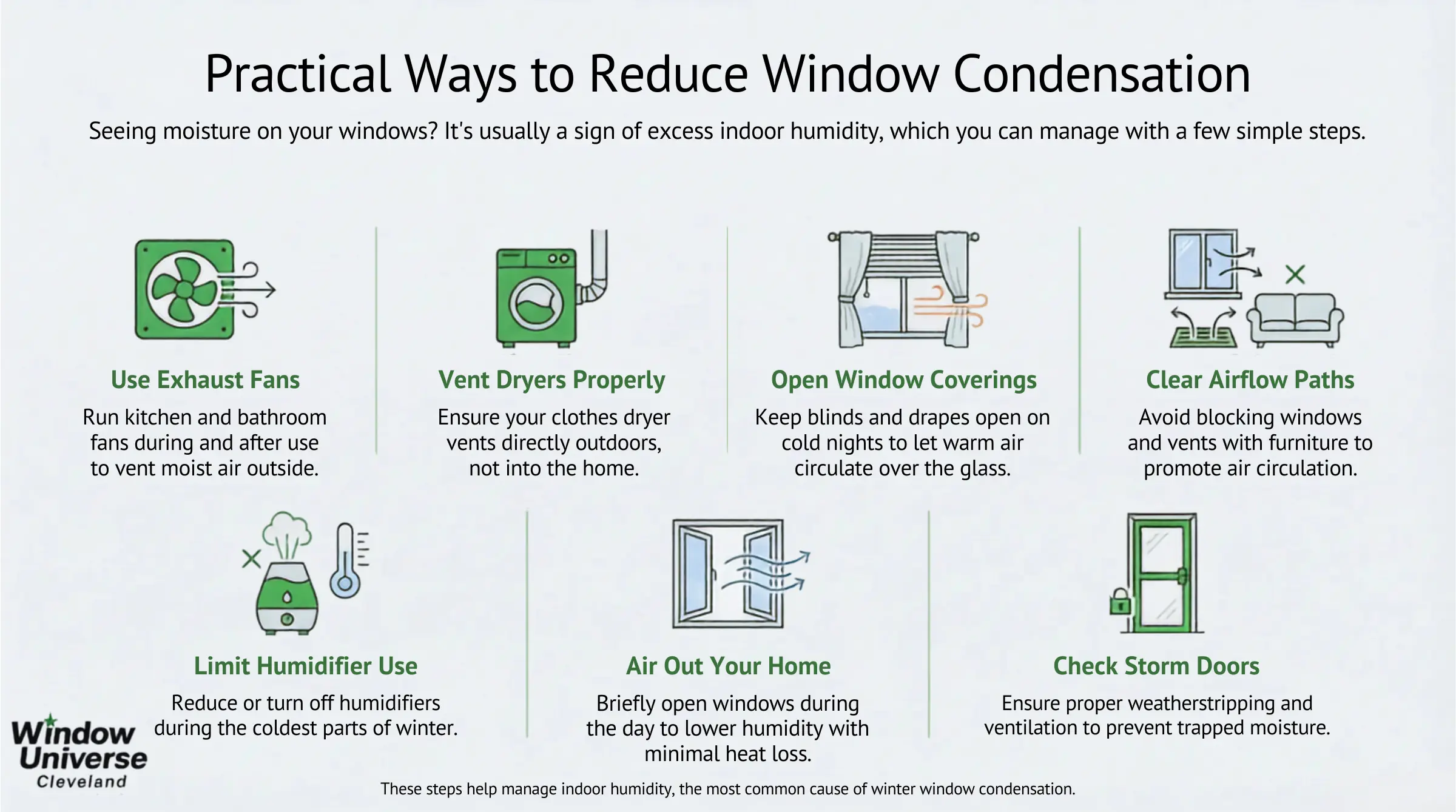
Persistent condensation deserves attention. Repeated moisture around the opening sometimes leads to peeling paint, stained trim, swollen wood, or mold growth.
Exterior condensation appears on the outdoor surface of the glass. It often develops overnight or early in the morning, then disappears after sunlight warms the glass.
Northeast Ohio homeowners often see this during late summer and early fall. The air remains humid, while clear nights allow exterior surfaces to cool.
Exterior condensation forms when the outer pane becomes colder than the dew point of the outdoor air.
Heat escaping through an inefficient window warms the exterior pane. That added warmth sometimes keeps the outside surface above the dew point.
An energy-efficient window limits heat transfer from inside the home. The exterior pane stays cooler because less indoor heat reaches it. On a humid morning, moisture in the outdoor air then condenses on the cool glass.
Exterior condensation often means the window is limiting heat transfer, though condensation alone does not measure the window’s overall quality. Weather, shade, landscaping, wind, and the direction the window faces also affect where it appears.
Fog that appears inside a double-pane or triple-pane glass unit is different.
Modern insulated glass units use two or three panes separated by a spacer. The space between the panes is sealed and often filled with an insulating gas such as argon.
The glass unit also includes material designed to absorb small amounts of moisture left inside during manufacturing.
When the edge seal fails, outside air and moisture enter the space between the panes. Once enough moisture accumulates, the glass develops fog, droplets, streaks, or a cloudy film.
You cannot clean this moisture from either side because it is trapped inside the sealed glass unit.
A failed insulated glass seal does not always look the same.
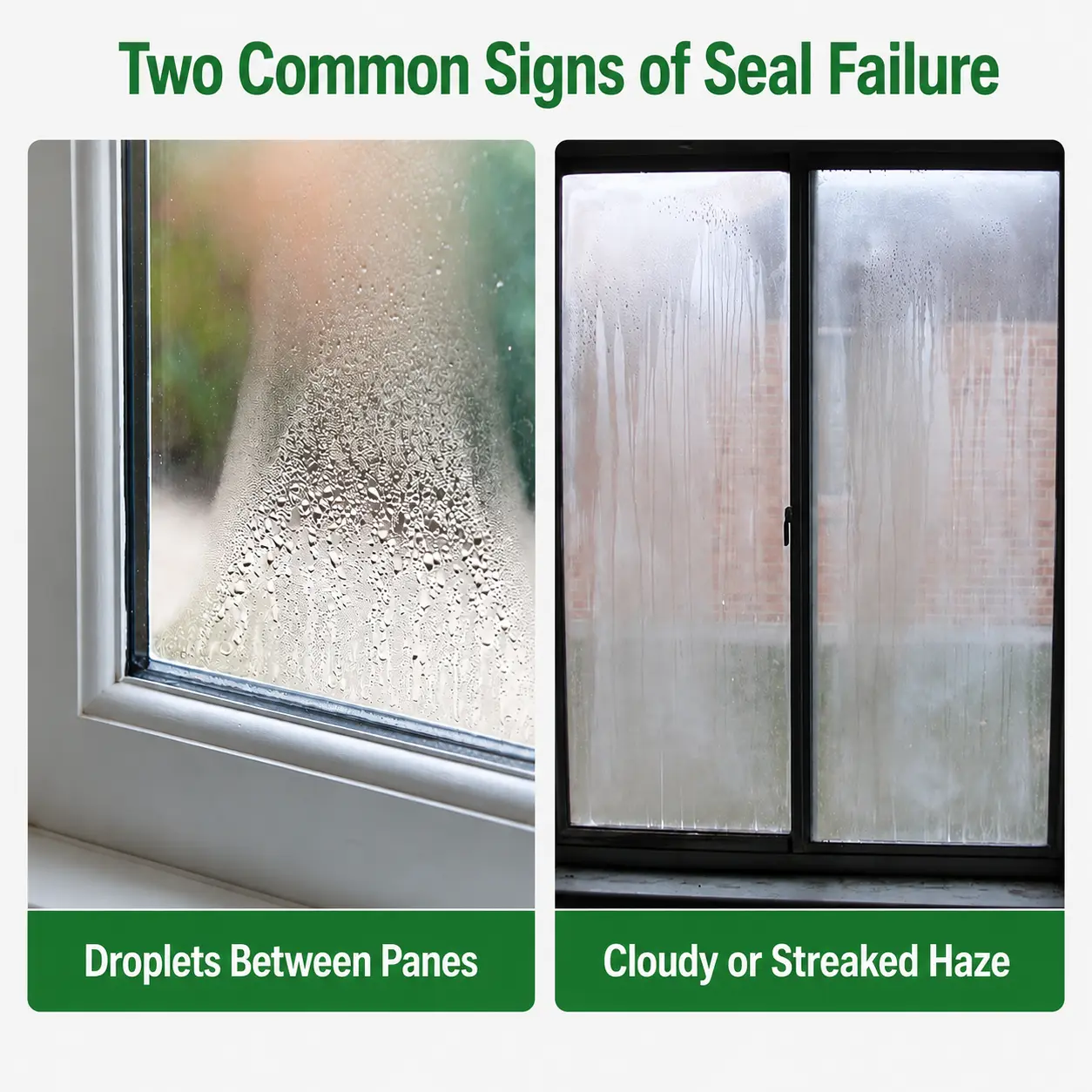
Common signs include:
The fog sometimes comes and goes at first. Changes in temperature and sunlight move the moisture around inside the unit. Over time, the haze often becomes more noticeable.
A failed glass seal means the insulated glass unit no longer performs as designed. It does not always mean the frame, sash, hardware, and installation have failed.
The window might still open, close, lock, and keep rain outside. The failed seal still affects appearance and reduces the insulating value of the glass.
When several parts of the window are failing, it helps to consider the age and overall condition of the window rather than focusing only on the glass.n.
Best for:
A newer window with one failed insulated glass unit
✓ The frame remains solid and square
✓ The sash opens, closes, and locks properly
✓ The weatherstripping remains in good condition
✓ Only one glass unit has failed
✓ Matching replacement glass is available
✓ The warranty covers glass seal failure
Best for:
An older window with additional condition or performance problems
✓ Several windows have failed seals
✓ The frames show rot or water damage
✓ The sashes stick, sag, or fail to lock
✓ The windows have noticeable drafts
✓ Replacement parts are unavailable
✓ The installation shows water intrusion or poor fit
Many window warranties include some level of insulated glass seal coverage. The length and terms vary.
Before ordering glass or replacing the window:
Some warranties cover the glass unit but not the labor required to install it. Others reduce coverage based on the age of the window.
A basic test often identifies where the moisture sits.
Lighting sometimes makes the location difficult to judge. Look at the window from several angles. A flashlight held near the glass also helps reveal which surface contains the moisture.
Do not lean from an upper-floor window or climb an unsafe ladder to inspect exterior glass.
The fog itself is not always the main concern. Standing water around the opening often creates the larger problem.
Watch for:
Interior condensation should stay on the glass. Water appearing inside the wall, below the frame, or during rain points toward a different issue. Possible causes include exterior water intrusion, damaged flashing, failed caulk, roof leaks, or installation problems.
🪟 10 Clear Signs You Might Need New Windows (And What to Do Next)
The type of fogging you notice often changes with the season.
Warm days, humid air, and cooler nights often produce exterior condensation in the morning. Shaded windows might stay foggy longer than windows facing the rising sun.
Large temperature swings make condensation more noticeable. Exterior fog remains common during damp mornings. Interior condensation might begin as homeowners turn on their heating systems and keep windows closed.
Indoor condensation becomes the main concern. The glass surface gets colder as outdoor temperatures fall. Cooking, showering, humidifiers, and limited ventilation raise indoor moisture.
A humidity level that caused no problem at 40 degrees outside might produce heavy condensation when the temperature falls below zero.
Changing temperatures bring a mix of interior and exterior condensation. Rainy conditions and damp basements also raise indoor humidity.
Fogging that appears only under specific weather conditions often differs from a failed seal that produces recurring haze inside the glass.
Consider an inspection when:
A proper inspection should separate a humidity problem, glass seal failure, and installation issue. Those problems have different solutions.
A foggy window does not always mean the entire window needs to be replaced.
Interior condensation often points to excess indoor humidity. Exterior condensation is usually a temporary weather condition. Moisture trapped between the panes usually means the insulated glass seal has failed.
The next step depends on the age and condition of the full window. In some cases, replacing the insulated glass unit is enough. In others, full replacement makes more sense because the frame, sash, hardware, or installation also shows signs of failure.
If complete replacement appears to be the better option, our guide to window replacement costs in Cleveland explains the factors that affect project pricing
Triple-pane glass often keeps the room-side surface warmer than less efficient glass, which lowers the chance of interior condensation. High indoor humidity still produces moisture under cold enough conditions.
One failed glass unit does not require replacing every window. Consider the age, condition, operation, efficiency, warranty, and number of affected windows before deciding.
Bedrooms often have closed doors, closed blinds, limited airflow, and added moisture from people breathing throughout the night. Improving circulation and slightly opening blinds often reduces the problem.
The glass cools overnight. When moist air reaches the colder surface, water vapor condenses. Exterior fog is common on humid nights. Interior fog is more common when the home has elevated humidity during cold weather.
That window might receive less airflow, sit in a more humid room, stay shaded longer, or have different glass performance. Fog trapped between the panes of one window also points toward an isolated seal failure.
A dehumidifier often reduces interior condensation when excess indoor moisture is the cause. It will not remove moisture trapped between sealed panes.
The appearance sometimes changes with the weather, but a failed seal does not repair itself. Once moisture enters the insulated glass unit, cleaning the exposed surfaces will not remove it.